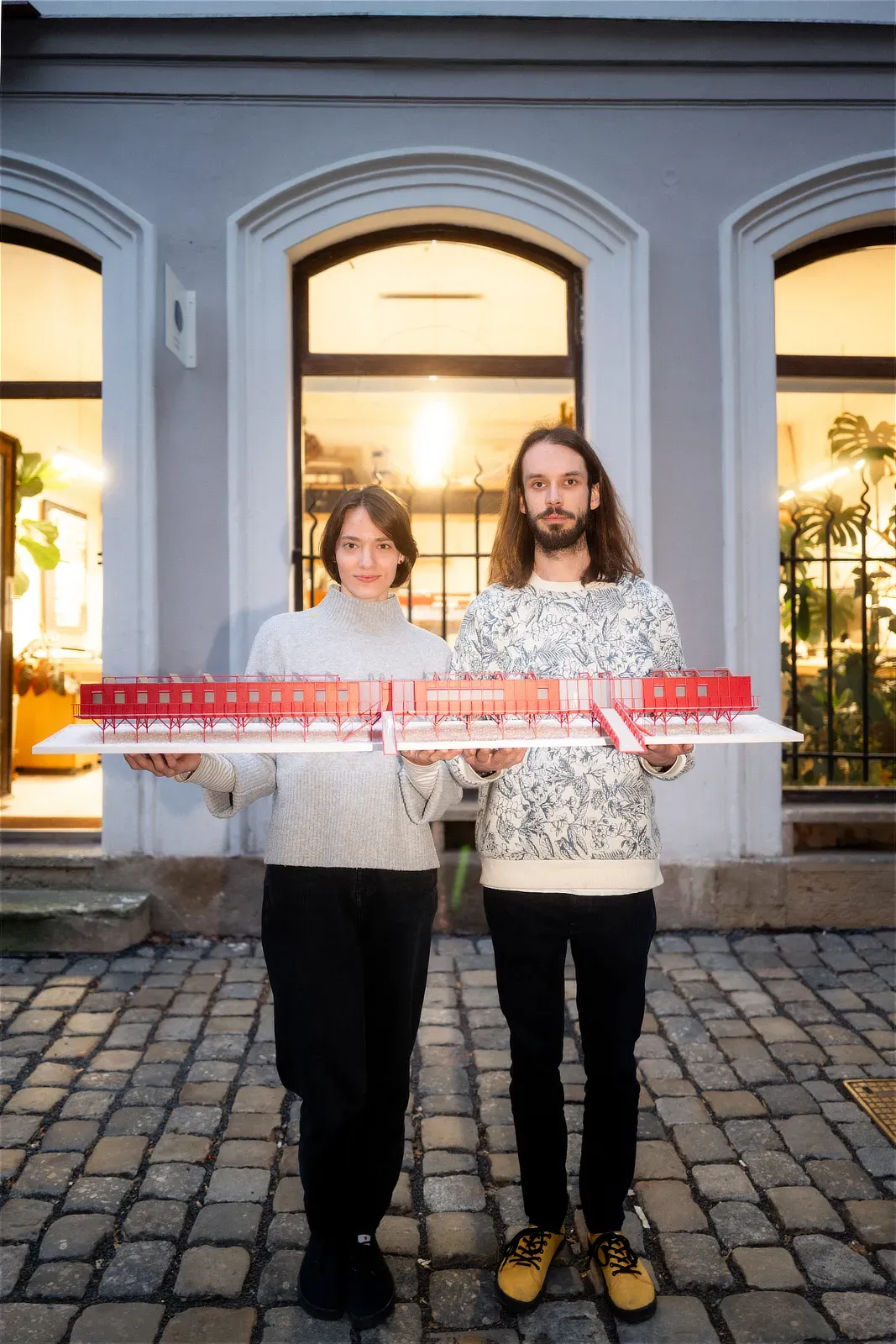
We are rational in concept, uncompromising in detail, collaborative in communication, and happiest when creating with our own hands. During our architectural studies, we realized that the design itself is only half the work. The other, equally crucial part is how effectively you communicate it. The quality of presentation directly dictates how accurately others understand your idea. Working on projects, what drew us in the most was finding ways to present architecture. We don’t think of models as simple miniatures, but see them as active presentation tools. We enjoy refining concepts, clarifying goals, and shaping the model so it clearly conveys the main idea of the design.
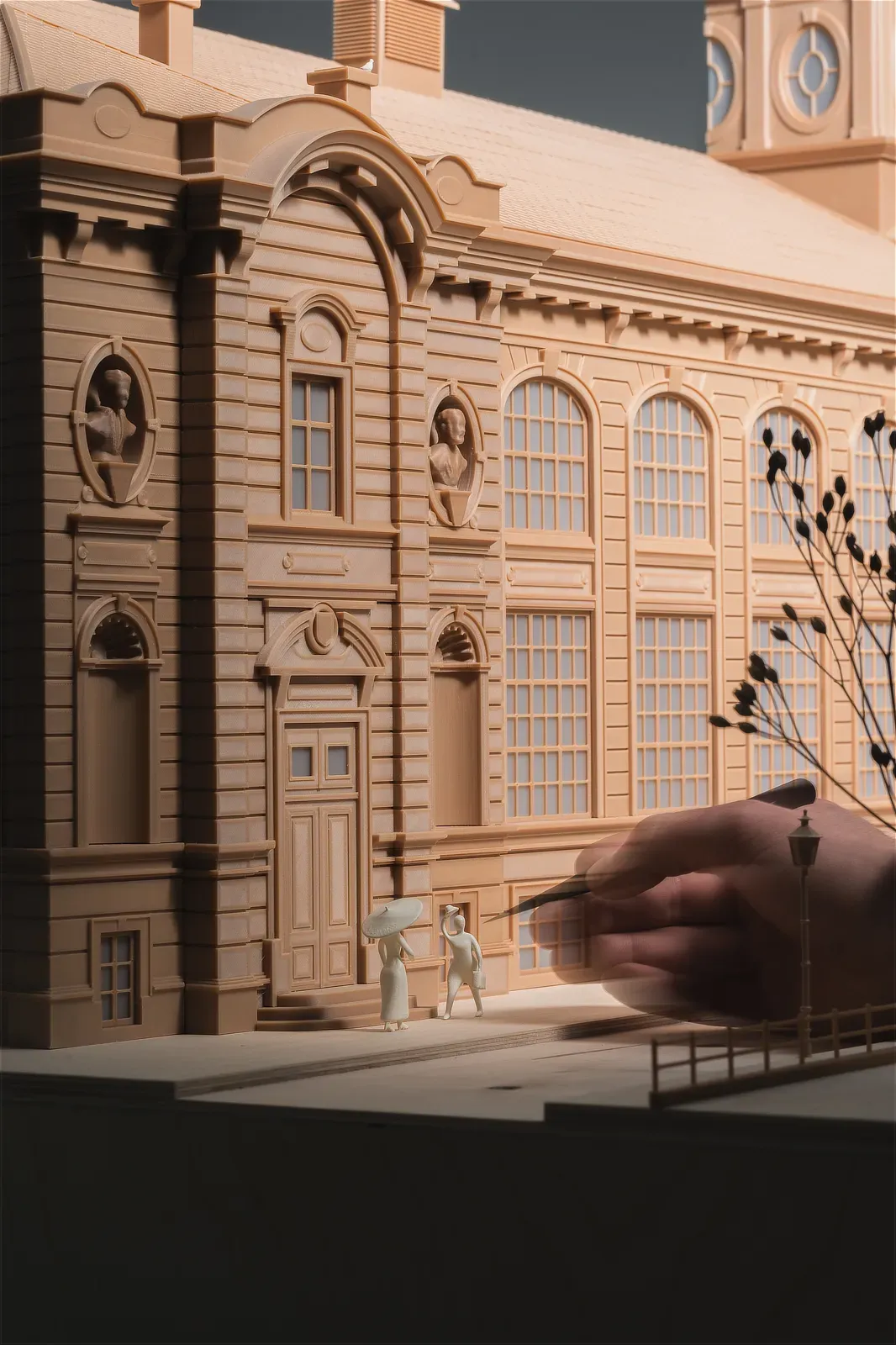
model vs. render
A render always presents a single, carefully chosen viewpoint. A physical model, on the other hand, offers freedom across an infinite number of perspectives. It invites the viewer to slow down, walk around the object, and explore spatial relationships without artificial enhancements. While a render often requires visual noise just to keep the image from looking empty, a physical model relies on natural abstraction. Instead of inventing details that have no place in the early design stage, it filters out clutter and directs discussion to what truly matters. Focus naturally shifts to volumetric relationships, spatial context, and the core logic of the design.
Why We Focus Exclusively on Models?
In standard architectural practice, model building is often just a rushed final phase right before a deadline. In the daily hustle, there is rarely enough time to explore materials, unconventional techniques, or the theory of presentation. That is why we chose to dedicate ourselves entirely to this discipline. It gives us the room for ongoing research and experimentation, from testing new technologies and studying human perception to refining handcrafted forms. This focus allows us to build deep, specialized know-how, approaching physical architectural presentation as a deliberate conceptual process rather than a deadline rush.
architects for architects
We graduated from the same faculties and know the reality of architectural practice firsthand. We understand technical drawings, urban context, and the rush that comes with every project submission. Because of this, you don't need to spend time explaining the broader picture. We speak the same language and understand the intent right away. Rather than acting as just an external vendor, we serve as colleagues you can openly discuss the best approach to physically presenting your design with.
Pája
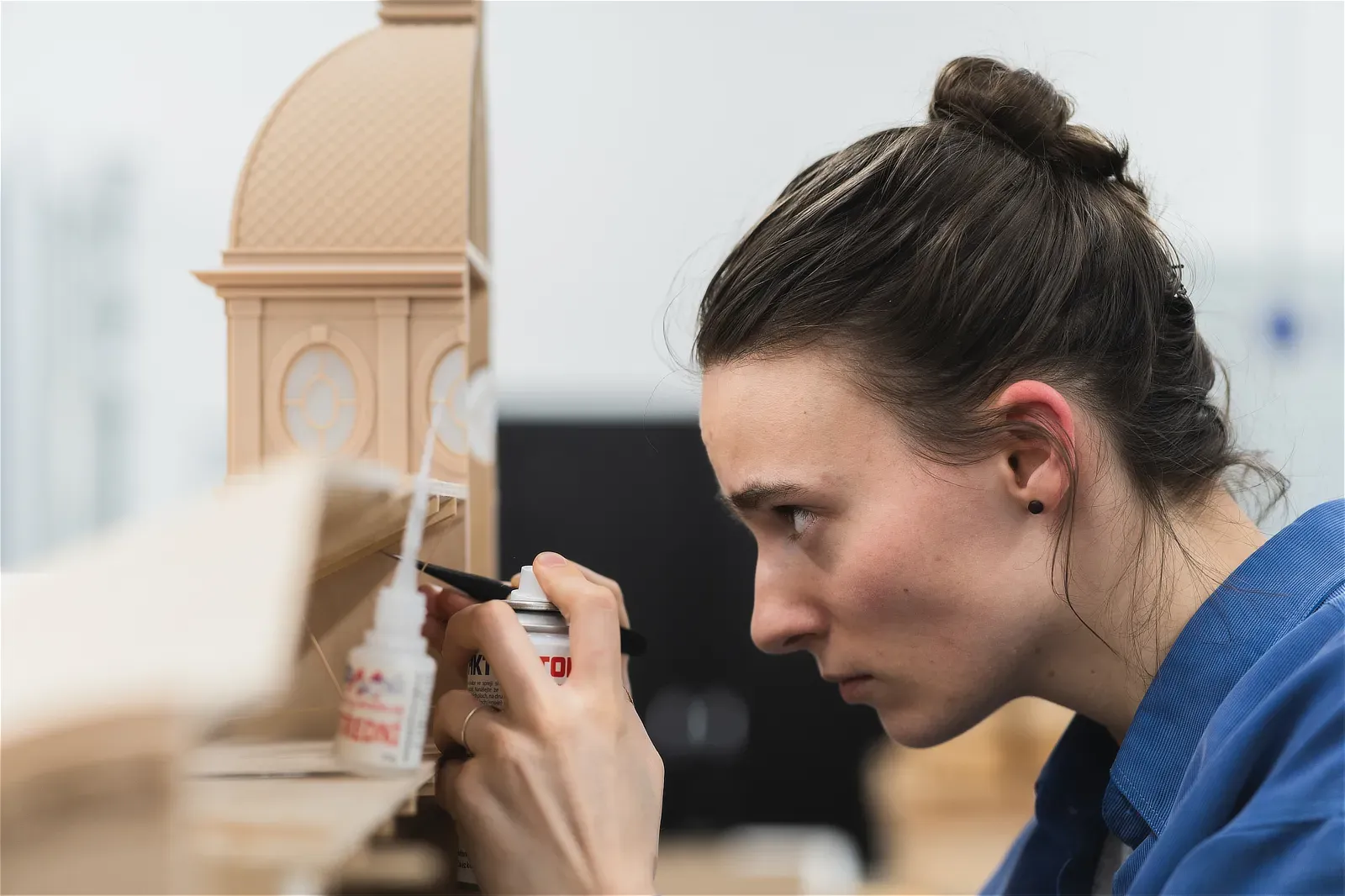
I enjoy the diversity of our work and the process of creating with my hands. In the studio, I am primarily responsible for the hands-on crafting process, from precise assembly to creating the smallest details where tenths of a millimeter and a good deal of patience make all the difference. I explore suitable material combinations, and outside direct work on the models, I handle initial client communication and sharing our work with the public. During production, I love finding solutions for spots where a detail seems impossible to execute. Moving from an economics high school to studying architecture at FUA TUL gradually steered me directly toward model making. I enjoy developing concepts through open dialogue, bringing a rational perspective and aesthetic sensitivity to ensure the final model works as a clear and convincing whole.
Ondra
I thrive on the diversity of our work and the moment an architectural concept takes physical form. In the studio, I primarily manage project coordination and communication, so we often connect right from the initial breakdown of the brief. At the same time, I oversee the technical and digital aspects of our models, from data preparation and 3D modeling to structural logic and working with technologies. I need order and clarity in project files so we can build from them with complete confidence. My background from a civil engineering high school and architecture studies at FUA TUL gave me both technical grounding and conceptual insight. My goal is to maintain a clear structure throughout the process and deliver the best possible result within the given timeframe and budget.